Changing tastes in games
Wednesday, March 25, 2026Inspired by Brainbaking and JoelChrono, I’ve been making my own top 25 games post, writing a few notes on why I love each game so much. It’s tough to choose my favourite games — let alone rank them — but I’m enjoying it; I’ve played and loved games all my life. But’s been interesting to see how my tastes have changed as I’ve got older.
The first and most surface-level change is the amount of time I have for (most) games. This happens to a lot of gamers as they get older and have more responsibilities. Games can be one of the most time-intensive media, and playtime is often considered a selling point, a sign of value-for-money. But this is based on the assumption that the transaction simply an exchange of cash for minutes of pleasure.
John Stuart Mill characterised pleasures as being either “higher”, or “lower”, with higher pleasures being intellectually and morally satisfying, and lower pleasures merely feeling good. For Mill, these pleasures are different in kind. While both have value, the higher pleasures have more value, and such a kind of value as to not even be commensurable with lower pleasure — essentially, you can’t substitute a night at the opera with a sufficiently large amount of cocaine.
It’s fair to say games span the range of these higher and lower pleasures, but it’s more about how than what you play — the same game may be enjoyed by one person as a higher pleasure and another as a lower pleasure, or even as such by the same person at different times. It feels to me that lower pleasures are increased by duration, but higher pleasures are not. For example, a longer massage is (to a point) more pleasurable than a short massage, but a long poem is not necessarily more intellectually satisfying than a short poem.
This shift toward shorter-playing games points toward games that are higher pleasures for me. Essentially, I want to be able to look back on the (still substantial!) time spent with a game be able to earnestly say it was time well-spent, that I’ve come out of it with some broadened perspective or experience I can reflect on for time to come. Another way to put it is I want to be appreciating the game as much as I am enjoying the dopamine its lights, sounds, and rewards elicit. To me, this generally means games with rich narratives, but doesn’t exclude games where the satisfaction comes from the mechanics and design alone. But we’ll get back to that.
Looking back at my Steam Library, most of the games with a large number of play-hours I can’t honestly say were worth it all. 400 hours on Tales Of Maj’Eyal? That’s 16 days of my life. Did I like the game? Clearly, yes. Do I think it’s worth giving 400 hours of my life to? I could have watched hundreds of movies, read dozens of books, seen friends 100 times, or experienced/learned/created who knows who-knows-what. And no, there’s no deep satisfaction that comes from having experienced this many hours of TOME. It’s merely a fun, well-designed game. TOME is far from the only offending game in this category.
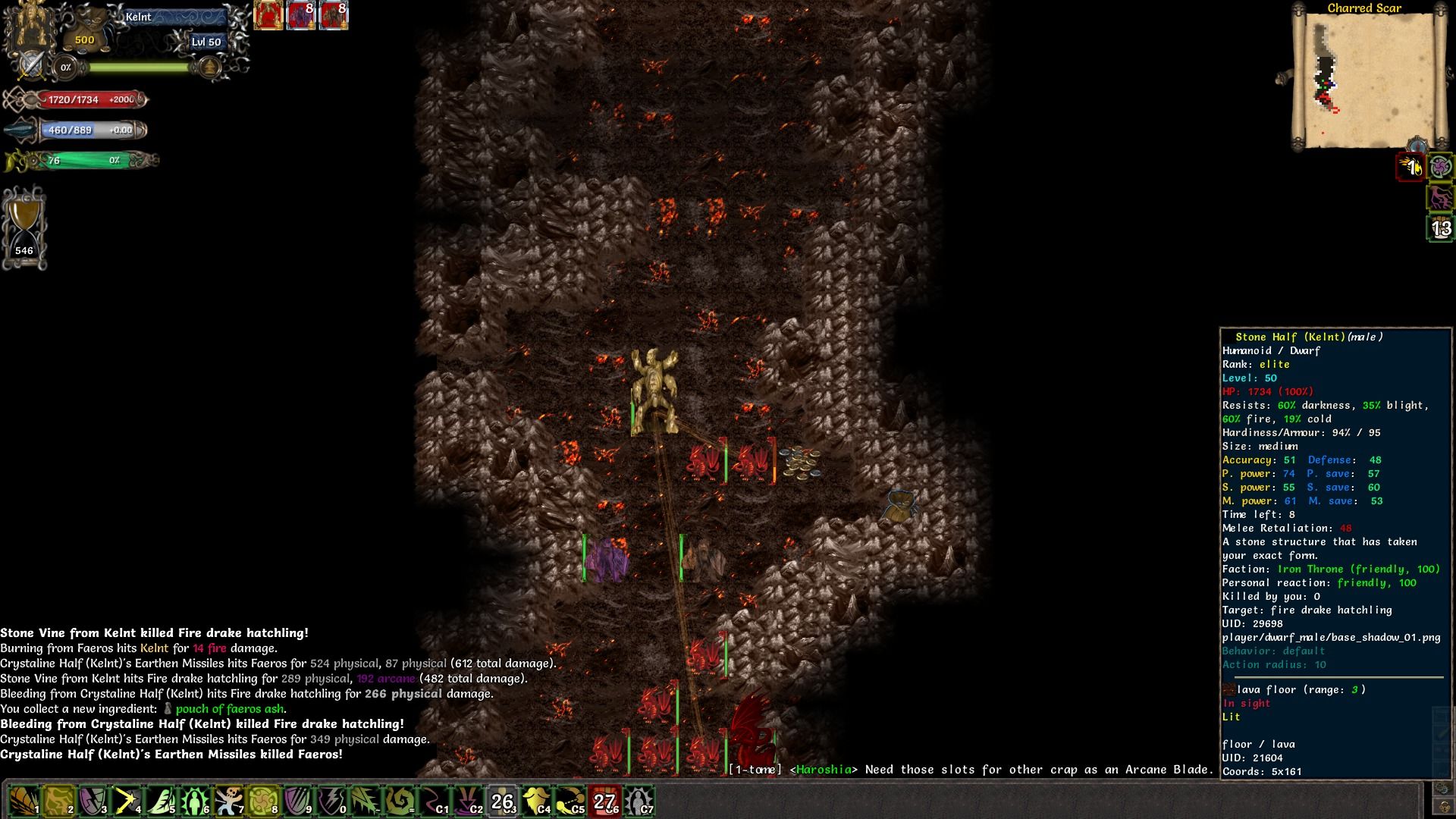
These long-playing obsessions were kind of the norm for me until my mid-20s. These days I’m cautious about games that have the potential to go this way. For example, I did give Slay The Spire a go, but could see it was a recipe for a (hugely compelling) timesuck, so I uninstalled it after a couple of weeks of fun.
A quote of unknown origin, though popularly attributed to 19th century chess-player Paul Morphy, goes
To be able to play chess is the sign of a gentleman.
To be able to play chess well is the sign of a wasted life.
No doubt, a love of chess can be a higher pleasure[1], but there does feel to be some truth to adage. A life devoted to the mastery of chess misses out on many other “higher” pleasures, and it’s not like there is some moral purpose to chess.
Appreciating a game’s mechanics and “game design” can be similar. There can be a great satisfaction in appreciating the design of the game, and understanding how to master its systems and strategy. But as with chess, there comes a point where playing and mastering further doesn’t increase appreciation. I have probably 200-300 hours spread across both Binding Of Isaac games (mostly from 2011-2012). Content creator NorthernLion has thousands of hours, and the top players on Steam apparently have tens of thousands of hours. The Binding of Isaac has a lot of content, and its mechanics are deep. But I do think there comes a point where the uncovering of content and further mastery of the mechanics are not really deepening one’s appreciation and satisfaction for the game. At that point, further play essentially becomes a lower pleasure.
None of this is to say I’m opposed to playing games as a lower pleasure, or that I’m judging people for what they choose to play (although if I’m honest, guy (definitely a guy) who has apparently played 80,000 hours of BoI — I am judging you). All I’m saying is I’m generally no longer willing or able to play games that consume my life, and want the time I spend playing a game to be “well-spent”, and this influences which games I’d consider my favourites[2], and also influences which games I tend to pick up. These days I go for games with narratives that have something interesting to say that I can follow up with essays or long-form analysis podcasts, or else mechanics that open up new ways of thinking, and absolutely nothing that demands over 100 hours of my time.
Or maybe it’s just that chess is an approved pleasure of the upper classes and I’ve internalised their ideology like a good little prole. ↩︎
Though when the top 25 list eventually materialises, some of these time-sink games from my younger years will have made it in just because they were so significant to me at the time. ↩︎